
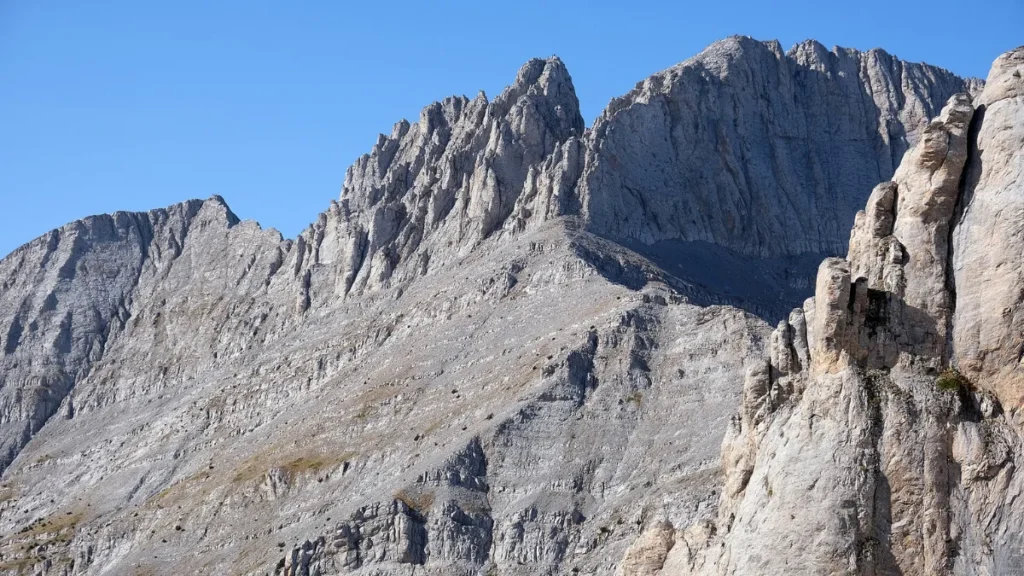
Ancient Landmark Recognized for Mythology, Nature, and Cultural Heritage
Mount Olympus, the legendary mountain long associated with Zeus and the Olympian gods in ancient Greek mythology, has taken another step toward possible recognition as a UNESCO World Heritage Site. Greece’s nomination is currently under review by the UNESCO World Heritage Committee, marking an important milestone in the effort to secure international recognition for one of the country’s most iconic landscapes.
While no final decision has been announced, the committee is expected to examine whether additional information is needed before determining if the mountain meets the requirements for inscription on the prestigious World Heritage List.
A Mountain That Shaped Greek History and Mythology
Rising to about 2,918 meters (9,573 feet), Mount Olympus is Greece’s highest mountain and has occupied a unique place in history for thousands of years. In ancient Greek mythology, it was believed to be the home of Zeus and the twelve Olympian gods, who were said to gather there to rule over the world from its cloud-covered peaks.
The mountain’s dramatic landscape-with steep slopes, rugged cliffs, and summits frequently hidden by mist-helped inspire generations of myths that later became central to Western literature, art, and culture.
Today, the mountain remains one of Greece’s most recognizable natural landmarks, attracting visitors interested in both its legendary past and its spectacular scenery.
More Than a Mythological Symbol
For communities living around the mountain, Mount Olympus is far more than a historical landmark. Residents of nearby towns such as Litochoro have close ties to the mountain through tourism, outdoor recreation, and local traditions.
Local leaders describe Olympus as an essential part of the region’s identity, where nature, history, and everyday life intersect. Hiking, mountaineering, and eco-tourism have become important sources of income while helping introduce visitors to the area’s rich cultural heritage.
Layers of Religious History
Although best known for its connection to Greek mythology, the mountain also reflects centuries of changing religious traditions.
Archaeological discoveries on its slopes have uncovered evidence of ancient open-air sanctuaries dating to the Hellenistic period, suggesting that worshippers once climbed the mountain to perform ceremonies and offer sacrifices to Zeus.
As Christianity spread across Greece, the mountain’s spiritual significance evolved rather than disappeared. Today, religious landmarks continue to draw pilgrims and visitors.
Among the best-known sites is the Orthodox chapel dedicated to Prophet Elias, located at an elevation of roughly 2,803 meters, making it one of the highest Orthodox chapels in the world. Nearby are the remains of a historic monastery founded in the 16th century, along with the Holy Cave of Saint Dionysios, a site that remains significant in the country’s Christian tradition.
UNESCO Review Still in Progress
Greece first placed Mount Olympus on UNESCO’s Tentative List in 2014, an essential step before a formal World Heritage nomination can be considered.
The evaluation process examines a site’s cultural importance, environmental value, conservation measures, and long-term management plans. Expert advisory bodies assess whether the location satisfies UNESCO’s strict standards before the World Heritage Committee makes a final decision.
Current discussions indicate that UNESCO may request additional documentation from Greece before reaching a conclusion. Such a request would not represent a rejection but rather a continuation of the evaluation process.
Also read: Yuvraj Singh Linked With Delhi Capitals Coaching Role as IPL 2027 Transfer Rumours Gather Pace
Tourism Growth Brings Conservation Challenges
Recognition as a World Heritage Site often leads to increased international attention, bringing economic opportunities alongside new conservation responsibilities.
Mount Olympus already attracts thousands of hikers, climbers, wildlife enthusiasts, and travelers interested in Greek mythology each year. Conservation experts have warned that rising visitor numbers could place additional pressure on sensitive ecosystems if tourism is not carefully managed.
Concerns include littering, unauthorized camping, and damage to protected natural areas. Officials and local organizations have suggested that future visitor management measures—such as improved monitoring or regulated access—could help protect the mountain while allowing sustainable tourism.
A Landscape of Global Significance
Regardless of the outcome of the current UNESCO review, Mount Olympus remains one of the world’s most remarkable cultural and natural landmarks. Its towering peaks combine ancient mythology, archaeological discoveries, centuries-old religious traditions, diverse wildlife, and breathtaking scenery within a single protected landscape.
If UNESCO ultimately grants World Heritage status, the designation would recognize not only the mountain’s legendary place in human history but also the ongoing need to preserve its unique environment for future generations. Until then, Mount Olympus continues to stand as both a symbol of Greece’s rich heritage and a reminder of the balance required between tourism and conservation.